Table Of Content
- Best AI Tool for Renovation Projects
- Best AI Tool for Creating Office Plans
- #1 AI Architecture Renders Generator and Virtual Stage Designer
- Six Selected for 2024-25 LAF Fellowship for Innovation and Leadership
- Creative Calculations: 6 Precise Projects Inspired by the Fibonacci
- Streamline Your Architectural Process

Even modest mid-sized firms—say, those with revenue in the $25–$50 million range—were founded more than 45 years ago on average, with some being twice as old. Our platform enables a detailed insight on the entire data and cost of the project in real time, allowing total control of the project to enhance the designer decision making process. ARCHITEChTURES enables a new and completely disruptive residential design process in a seamless human-machine collaboration. Through our proprietary Generative AI technology, currently international patent pending, our users obtain for each iteration and in real-time, the solution that best suits the geometry, objectives and design criteria entered. This enables the designer to have full control over the quantitative aspects of the design in order to focus on decision-making and improve his added value.
Best AI Tool for Renovation Projects
ArchiVinci is an innovative suite of AI-driven design tools encompassing the Sketch to Architectural Render AI Tool, Exterior Design AI Tool, Interior Design AI Tool, and Landscape Design AI Tool. It empowers users to effortlessly transform sketches into detailed architectural designs and enhance various aspects of design, from exteriors to interiors and landscapes. Hand-painted floors were the jumping-off point for designer Amy Peltier’s soothing primary bedroom design. “It was so much work, but it turned out beautiful.” The firm wanted the space to feel “light and airy and breezy,” and incorporated fabrics and wall coverings by Thibaut in a soft color palette. Peltier and designer Marina Kelly installed an arch to divide the bedroom from the sitting area, breaking up the large space.
Best AI Tool for Creating Office Plans
In fact, architects are able to set additional presets for each design by selecting specific housing typologies, such as villa or apartment, as a blueprint. Recognizing the power of human ingenuity, CONIX.AI also offers the ability to manually customize each drawing, promoting a true synergy between architects and AI tools. Qbiq is an AI software that is suitable for producing efficient planning layouts for office spaces. Acting as the architect’s co-pilot for office designs, qbiq delivers a full-suite planning solution.
#1 AI Architecture Renders Generator and Virtual Stage Designer
Simply upload your hand-drawn sketches or input your design preferences, and let the AI tools take over. Customize the generated designs, receive smart recommendations, and visualize your architectural, exterior, interior, or landscape designs with ease. An office space in the Gatehouse is now a soothing spa-inspired lounge designed by Margaret Lalikian. The designer referenced the house’s original name, El Robles—Spanish for oak tree—with a tree-filled landscape mural by Arpy Dabbaghian. “For the wall mural, I had to pick something to bring them into nature and a calming environment,” Lalikian says.
8 AI-powered architectural rendering programs you should try - Parametric Architecture
8 AI-powered architectural rendering programs you should try.
Posted: Sun, 15 Oct 2023 07:00:00 GMT [source]
Best AI Tool for Site Analysis Plans
This comprehensive guide to AI in architectural design has highlighted real-world examples that demonstrate the profound impact of AI on the industry. These case studies and applications serve as a testament to the transformative power of AI within architecture, pushing the boundaries of creativity, sustainability, and accessibility. As architects and innovators, it's imperative to harness the potential of AI to create a built environment that meets the needs of today and tomorrow. In this section, we've witnessed how AI-generated design concepts, energy efficiency optimizations, sustainability initiatives, and accessibility enhancements are reshaping the architectural landscape. These examples underscore the importance of embracing AI in architecture, not as a replacement for human ingenuity but as a powerful collaborator that unlocks new possibilities and ensures a brighter, more inclusive future for architectural design. It uses AI algorithms to optimize designs for parameters like material use, cost, and energy efficiency.
Six Selected for 2024-25 LAF Fellowship for Innovation and Leadership
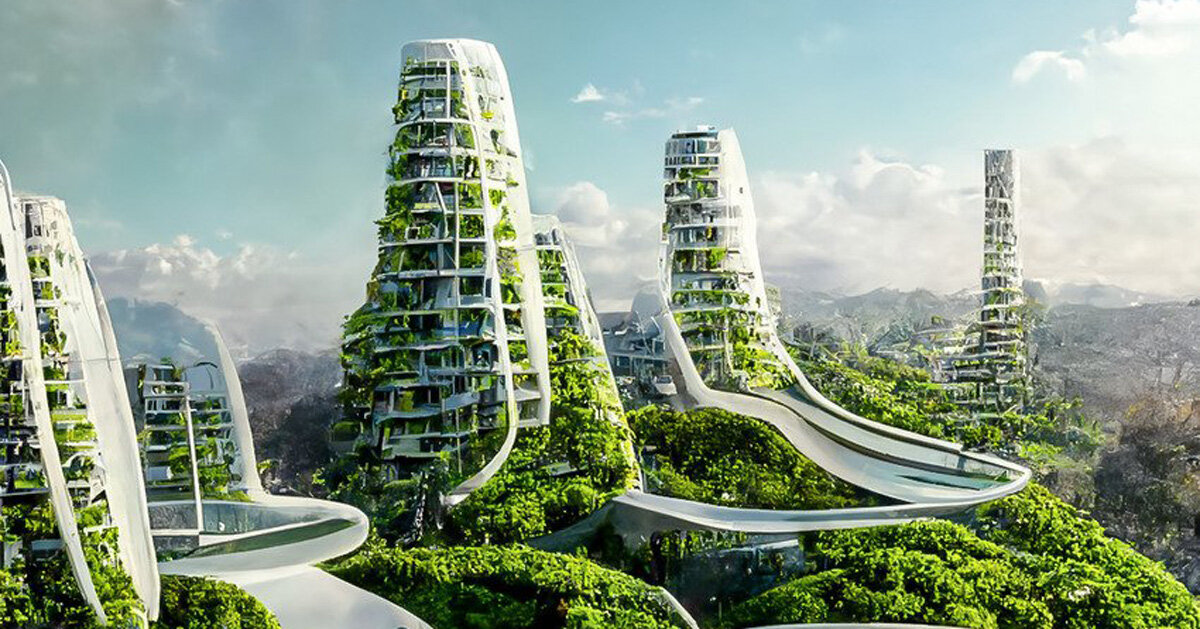
The list of examples is by no means exhaustive, but through its diversity, it paints a comprehensive picture of the phenomenon. For the time being, the implementation of AI in architecture is driven mostly by tech companies and highly specialized firms, but architects are picking up the pace through research studies and installation projects. The penetration of Artificial Intelligence within the architectural field adds up to the profound changes that call for a reinvention of the profession. Architects are using AI to analyze wind patterns, sunlight exposure, and energy usage to create skyscrapers that are not only visually stunning but also environmentally friendly. These smart buildings adapt to changing conditions, optimizing energy consumption and reducing their carbon footprint. Let's explore some remarkable examples where AI-generated design concepts have paved the way for groundbreaking architectural projects.
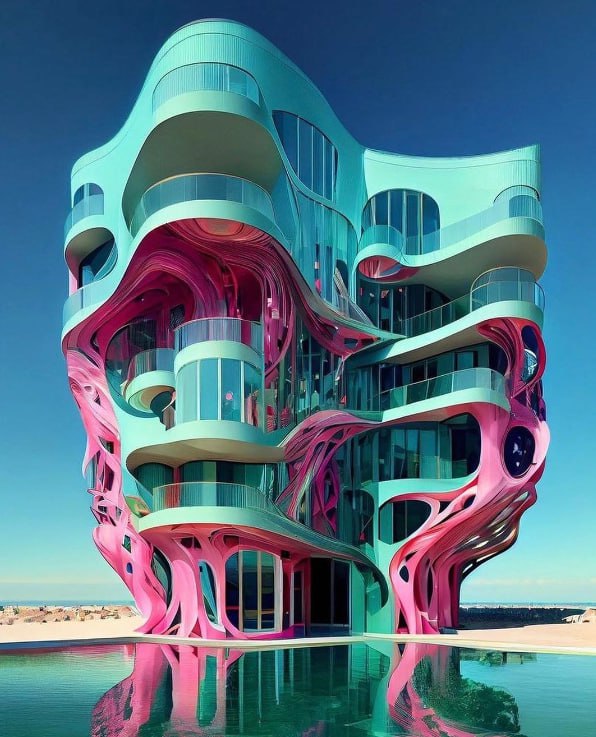
Troweled cement plaster was applied to the walls, and handcrafted Zia tile adds pattern to the floor. The landmark mansion was built in 1902 by architect Joseph J. Blick for Gertrude Potter Daniels, who paid $15,000 for the shingle-style home. In 1905, Susanna Bransford Emery-Holmes—known as the Silver Queen thanks to the source of her late husband’s fortune—purchased the home and soon made it her own.
AI Creative Challenge 5.0 - Parametric Architecture
AI Creative Challenge 5.0.
Posted: Wed, 17 Apr 2024 14:02:21 GMT [source]
Just input your floor plans and elevations, and the AI Architecture Generator will generate realistic 3D models, complete with textures, lighting, and even virtual landscapes. This capability enables architects to visualize and present their designs more effectively. This six-course series explores essential urban design concepts using open source software and equips planners with the tools they need to participate fully in the urban design process. With the help of Autodesk XR product marketing manager Austin Baker, I teleport in and out of architectural models and fly around a Boston municipal building, seeing how its grand staircase unfolds into a large atrium.
The adaptive reuse of 4561 Colorado's warehouse into a cutting-edge soundstage seamlessly blends architectural innovation with industrial charm, creating a vibrant entertainment hub and cultivating a dynamic campus atmosphere. We advocate at the federal, state, and local levels for climate action, equity, student loan debt relief, business interests, and more. We champion meaningful policies that enable architects to build better buildings and take decisive action on the issues that matter most to our industry.
One of the biggest problems with text-to-image technology is their tendency to bias, caused by their use of pools of existing images to produce new visualisations. But Kudless believes that text-to-image software is more of a powerful tool than a replacement for architects, as it still requires a user with knowledge and skill to produce useful results. "It's incredibly frustrating at times the amount of labor that especially younger people are being asked to do within firms to produce [render] images," said Kudless. Designers acknowledged that the software has the potential to change the way in which labour is executed in architecture and design offices. Architecture studios are currently often awarded projects based on renderings that are expected to bear as close a resemblance as possible to the building eventually constructed.
In every step of the content generation process, our platform affords granular control, ensuring your creative vision is flawlessly brought to life. Leveraging a slew of cutting-edge backend features, Leonardo excels in model fine-tuning, prompt adherence, training speed, inference pace, and multi-image prompting capabilities. We’ve addressed common obstacles such as image degradation and have introduced custom upscaling, all with a commitment to continuous improvement and expansion. Redesign exteriors and interior spaces using our AI tools to create design variations in seconds. AI in architecture design is based on computer programs that mimic human cognition to solve complex problems and respond dynamically to stimulus. A closely related subfield is machine learning, which refers to an AI system’s ability to recognize patterns and learn from them, independently improving its cognition ability without human intervention.